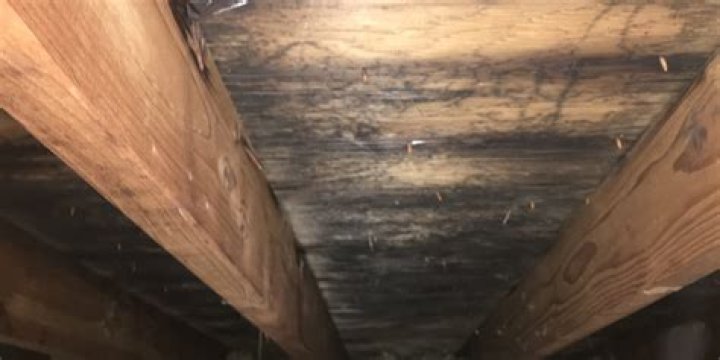
Why is the plywood in my attic turning black?
 Leah Mitchell
 news
If the plywood in your attic shows any black discoloration, the problem has moved beyond moisture. If your attic plywood is stained you have mold that should be removed. Don't hesitate to contact a professional ASAP.
Why is the wood in my attic black?
When moisture condenses on plywood roof sheathing repeatedly or continuously the wood will turn black. This can be caused by the action of moisture interacting with the tannins in the plywood. The picture above is from a long-standing moisture condition in an attic where much of the roof sheathing has turned black.How do you remove black mold from attic plywood?
Black Mold RemovalMethods for dealing with attic sheathing mold include hand sanding, encapsulation and dry ice blasting. Even with hand sanding and encapsulation, the use of fungicides is often necessary, and dry ice blasting can be expensive and dangerous.
Is attic mold black mold?
Fungi, specifically black mold, is often found in attics for a variety of different reasons. Due to your attic being the closest thing to the roof of your house, any moisture will end up there resulting in black or white mold.How common is black mold in attic?
Mold in attics is very common and can usually be dealt with quickly and effectively. No need to panic and treat your home as if it's uninhabitable and beyond repair. Attic mold is caused by moisture and mildew issues.Getting Rid Of Attic Mold Stains When The Sale Of Your Home Depends On It Lisle, IL
What does toxic black mold look like?
Stachybotrys chartarum typically appears black or extremely dark gray in color. This mold tends to have very round splotches with a speckled appearance. Often, you see darker layers of mold over lighter layers.What does mold on rafters look like?
Mold will very often appear white when it is first developing and later change color after producing spores. While other mold will remain white throughout it's lifecycle due to the type of material that it is feeding on.How do you know if there's mold in your attic?
How to know if you have mold in your attic
- Hot and stuffy attic. ...
- Frost buildup on the underside of roof sheathing. ...
- Wet attic insulation. ...
- Water dripping from smoke detectors, fans, and light fixtures. ...
- Mildew smell in the attic. ...
- Dark staining on wood surfaces. ...
- Blocked/Insufficient Ventilation.
Will attic mold go away?
If you don't correct the cause of the moisture-inducing environment mold will return. For attics, the key to correcting the cause is to hire a professional to design and install the proper attic ventilation plan. Continually moving the air through the attic will keep condensation – and mold growth – at bay.Is attic mold toxic?
Unfortunately, mold in the attic is a serious hazard that can lead to serious illness or even death. Mold can lead to a variety of health problems, some of which include the following: Respiratory illness and/or infection. Itchy, watery eyes.Can you paint over mold on plywood?
You can paint over mold, but it will always reappear if you don't stop it in its tracks. Mold can cause severe respiratory issues for your family and pets.What causes mould on plywood?
Moulds and algal growth occur on both treated and untreated plywood. Their presence is related to temperature, humidity, wetting and the presence of atmospheric mould spores. The mould growth can be sooty black, unsightly, and spread rapidly in favourable circumstances, especially warm humid weather.Can you paint over attic mold?
The use of a white sealant/paint over remediated wood is also not acceptable; this is to protect the homeowner from companies that paint over the mold with a thick, white coating of paint that is called an 'anti-microbial' product, which 'kills' the mold.What should I look for when inspecting an attic?
Attic Inspection Checklist
- Ventilation. Signs of poor ventilation include, mold, rusted nails and condensation.
- Insulation. Your attic shouldn't feel drafty, and insulation should be plentiful and complete.
- Leaks. Water stains, rot and mold point to leaks.
- Pests. ...
- Exhaust ducts and vent stacks.